Why Industries Prefer Verified PU Castor Wheel Suppliers
Are you spending too much time chasing castor wheel suppliers who either ghost your inquiry or send inconsistent specs? You are not alone.
Procurement managers across India face exactly this problem when sourcing industrial mobility components without a proper verification layer. Finding reliable PU Castor Wheel Suppliers is not just about price.
It is about finding a supplier who understands load tolerance, floor conditions, and delivery commitments. This article breaks down why industries increasingly rely on verified suppliers, what to look for before shortlisting, and how platforms are making this process significantly less painful.
The Real Cost of Sourcing from Unverified Suppliers
Most procurement failures in the industrial components space do not start with a bad product. They start with an unverified supplier relationship that looked fine on paper.
When a supplier overstates load capacity or uses substandard polyurethane, your trolleys fail on the floor. That creates downtime, replacements, and accountability conversations no operations manager wants to have.
Verified suppliers bring documentation, consistent manufacturing standards, and a reputation they cannot afford to damage. That alone filters out a significant portion of risk before the first order is placed.
What Verification Actually Means in the Castor Wheel Market
Verification in B2B supply chains goes beyond a GST number. It includes production capacity audits, sample testing against stated specifications, and traceable quality records.
For PU castor wheels specifically, verification should confirm tread durometer, swivel bearing grade, and load test results at the rated capacity. A supplier who cannot provide this data is telling you something important before you even ask.
This is why serious procurement heads do not just search directories. They look for platforms where supplier credibility has already been assessed before the listing goes live.
What Makes PU Castor Wheels the Industrial Standard
Polyurethane tread has become the default for industrial trolleys, carts, and material handling equipment. The reason is straightforward: it absorbs impact without damaging flooring, performs quietly, and lasts significantly longer than rubber alternatives under load.
According to the Grand View Research Polyurethane Market Report, the global polyurethane market was valued at USD 76.64 billion in 2023 and continues to expand as industrial manufacturing demands higher performance materials.
That growth directly reflects demand from sectors like warehousing, automotive assembly, pharmaceuticals, and food processing, all of which require reliable floor mobility solutions with minimal maintenance.
Key Technical Features Buyers Should Evaluate
Before you commit to a supplier, the product specs need to hold up against your actual operational environment. Here is what to assess:
Tread material: Premium PU should be dense, non-marking, and resistant to oils and mild chemicals
Load rating: Always verify per-wheel capacity under dynamic load, not just static weight
Swivel mechanism: Low-quality swivel bearings fail under directional stress, especially in tight turning radii
Mounting plate or stem type: Confirm compatibility with your trolley frame before ordering in volume
Noise level: Facilities with strict floor noise standards need wheels tested for decibel output
A supplier who walks you through each of these without prompting is worth shortlisting.
Why Yusho Castor And Wheels Stands Out as a Leading Manufacturer
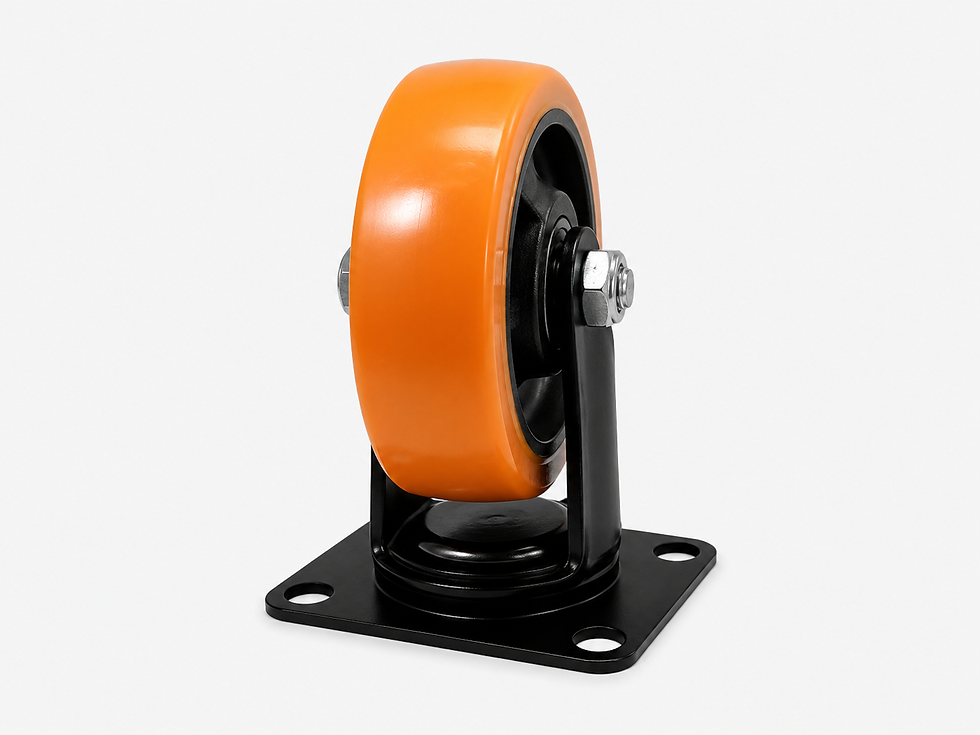
When procurement teams evaluate verified manufacturers in India, Yusho Castor And Wheels consistently comes up in shortlists. Their 4 inch heavy duty PU castor wheel is built for the kind of demanding environments where component failure is not an option.
Here is what the product delivers:
4 inch diameter with heavy duty construction designed for industrial trolleys and carts
300 kg load capacity per wheel, reliably tested under operational stress
Available in three types: swivel for full rotation flexibility, fixed for straight line stability, and brake for secure stationary parking
Orange PU tread engineered for smooth rolling, low noise output, and floor surface protection
Long service life with minimal maintenance, even in high frequency use environments
What separates Yusho from generic listings is the consistency of output across order volumes. Buyers who test a sample and then place a bulk order should receive the same product. That reliability is exactly what a verified supplier relationship is supposed to deliver.
How B2B Marketplaces Are Changing Supplier Discovery
Sourcing through traditional channels meant relying on trade referrals or cold outreach to manufacturers. The verification burden sat entirely with the buyer. That model is slow and exposes the procurement team to significant risk.
A global b2b marketplace have restructured this dynamic. Suppliers go through a listing process that validates their credentials, product categories, and business legitimacy before they reach a buyer.
This shift means procurement managers can spend less time on basic due diligence and more time on evaluation. The platform does the first filter. You do the final one. That division of responsibility speeds up sourcing without reducing quality control.
What Buyers Should Look for on a B2B Platform
Not all marketplace listings carry equal weight. When evaluating a supplier profile, focus on these signals:
Completeness of the product listing: Vague descriptions suggest vague manufacturing standards
Presence of certifications or compliance documents: Even basic ISO or BIS references indicate a supplier who understands standards
Range of product variants: A supplier offering swivel, fixed, and brake types signals depth of manufacturing capability
Response time and inquiry handling: How a supplier answers your first question predicts how they handle delivery problems
Buyer reviews or transaction history: Third party feedback carries more weight than any self-reported claim
If the supplier checks these boxes, your shortlisting decision becomes much faster.
How to Get Quotes Without Wasting Time
The traditional RFQ process in industrial procurement involves too many emails, unclear specifications, and follow-up cycles that stretch over weeks. That time has a cost, especially when you are sourcing for a production deadline.
A more efficient approach is to consolidate your requirements into a structured request and let verified suppliers come to you. Get Quotes from Verified Suppliers on Pepagora by posting your buying request with load specs, wheel type, quantity, and delivery timeline. Verified suppliers who match your requirements respond directly.
This reverses the sourcing dynamic. Instead of you qualifying each supplier, qualified suppliers self-select based on your stated requirements. The quality of responses is significantly higher because only capable suppliers respond.
Final Takeaway
Sourcing PU castor wheels is not a complex procurement decision on the surface. But the downstream impact of getting it wrong, through failed loads, floor damage, or missed delivery timelines, makes supplier verification worth the extra step upfront.
The smartest procurement decisions are made before the first order is placed. That means choosing verified suppliers, evaluating specs honestly against operational needs, and using platforms that do part of the due diligence work for you.
If you are ready to shortlist credible castor wheel suppliers for your next procurement cycle, Join B2B business portal india and connect with manufacturers who can meet your exact specifications.
Frequently Asked Questions
1. What is a PU castor wheel and where is it used?
A PU castor wheel uses a polyurethane tread over a metal core. It is widely used in industrial trolleys, warehouse carts, hospital equipment, and material handling systems where floor protection and load bearing are both priorities.
2. How do I verify a castor wheel supplier before placing a bulk order?
Request product samples, check load test certifications, and confirm manufacturing capacity. Suppliers listed on verified B2B platforms have already passed a basic credentialing process, which reduces your initial due diligence workload.
3. What load capacity should I look for in a heavy duty PU castor wheel?
For industrial trolleys and heavy carts, a minimum of 250 kg to 300 kg per wheel is the standard benchmark. Always confirm the rating is based on dynamic load testing, not just static weight estimates.
4. What is the difference between swivel, fixed, and brake castor wheels?
Swivel wheels rotate 360 degrees for maneuverability. Fixed wheels move in a straight line for directional stability. Brake wheels lock in place to prevent movement during loading or unloading. Most trolleys use a combination of these types.
5. Why should I use a B2B marketplace instead of buying directly from a manufacturer?
B2B marketplaces give you access to multiple verified manufacturers in one place. You can compare specs, request quotes in bulk, and evaluate supplier credibility without managing individual outreach to each factory.


Comments